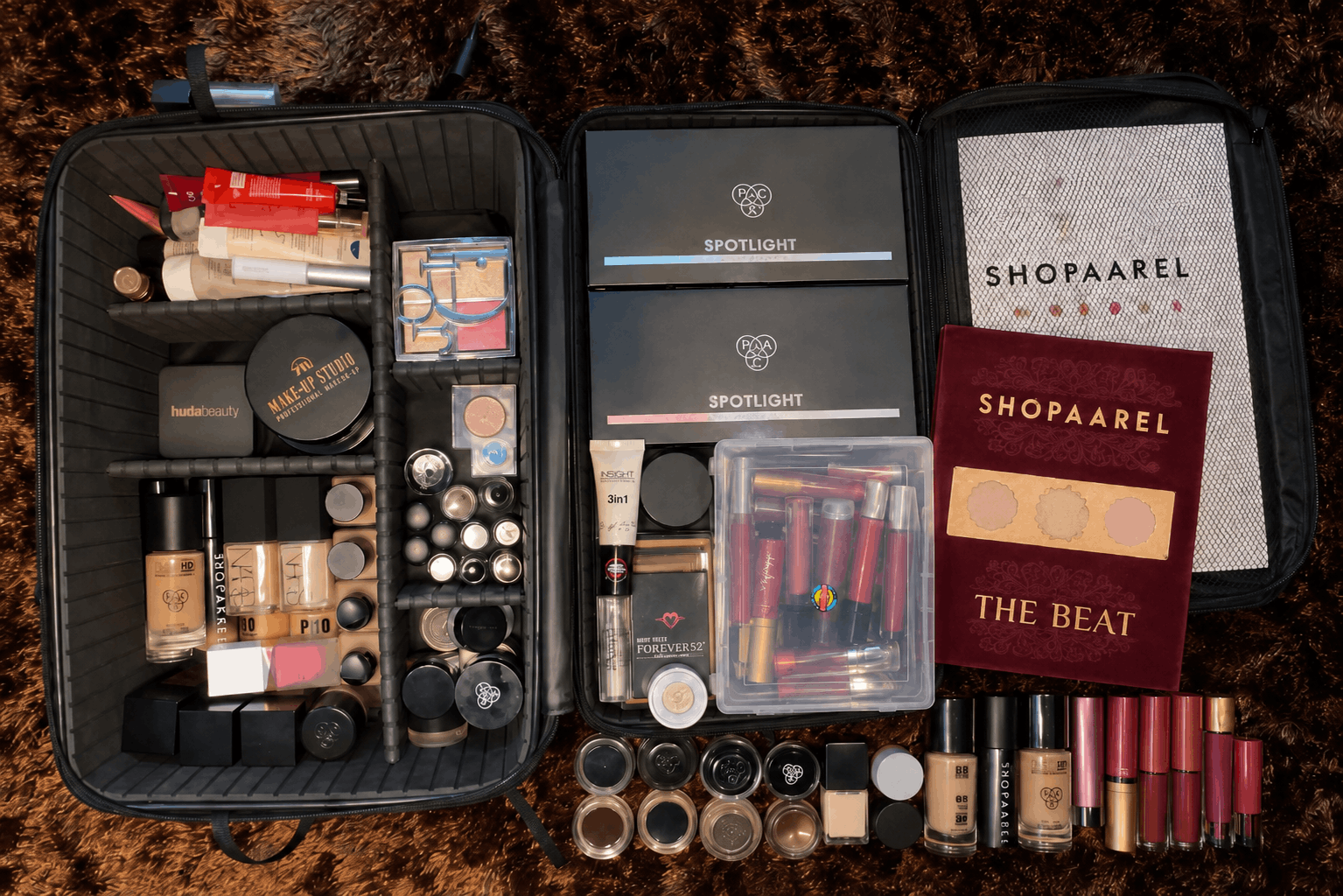
I still remember my first paid makeup gig doing bridal makeup for a family friend and realizing halfway through that my personal makeup bag was nowhere near enough for actual client work. I had maybe three foundation shades a couple of eyeshadow palettes and a handful of brushes I had collected over the years for my own personal use.
Her skin tone did not match any of my three foundations. I ended up mixing shades on the back of my hand in a panic trying to get close enough while she waited patiently in the chair. It worked out okay in the end but I walked away from that appointment knowing I needed an actual professional kit if I wanted to keep taking on clients.
That embarrassing morning kicked off months of research trial and error and a lot of money spent figuring out what a real working makeup kit actually needs versus what just looks impressive sitting on a shelf.
The Difference Between A Personal Collection And A Professional Kit
This was honestly the first thing I had to unlearn. A personal makeup collection is built around your own skin tone your own preferences and whatever trends caught your attention that month.
A professional kit needs to work for a wide range of skin tones undertones and skin types since you never know exactly who is going to sit in your chair. That means building out a shade range instead of just buying whatever looks pretty in the packaging.
What I Actually Prioritized When Building Mine
Here is the order I recommend focusing on based on what actually matters most for client work.
Foundation and concealer range comes first since color matching is one of the biggest challenges in professional makeup work. I built out a range using products like Fenty Beauty Pro Filt’r since the shade range covers a wide variety of skin tones which saved me from repeating that awkward hand mixing situation from my first appointment.
Setting powder and setting spray come next since client makeup needs to survive photos flash lighting and long event hours. I personally rely on Laura Mercier translucent powder for setting and a setting spray from Urban Decay for all day wear.
Brushes come after that and this is where quality genuinely matters more than quantity. I slowly built up a collection using brands like Real Techniques and Morphe since good brushes affect blending and application quality significantly compared to cheap flimsy ones.
Eyeshadow and blush palettes with versatile neutral shades came next since most clients want something wearable rather than extremely bold or trend specific looks. Having a few reliable neutral palettes covers the majority of client requests.
Lip products in a range of finishes and shades rounded out my kit along with basic false lashes and lash glue for clients who want a more dramatic finished look.
How I Actually Organize And Maintain My Kit
Step one invest in a proper makeup train case or a professional kit bag with clear compartments. I use one from a brand called Sunrise Cases since it keeps everything organized and easy to access during appointments instead of digging through a messy bag.
Step two sanitize your brushes and tools after every single client using proper brush cleanser. I learned this the hard way after a client mentioned a mild breakout a few days after an appointment which made me realize I needed to take hygiene far more seriously than I initially did.
Step three keep a supply of disposable applicators like lip wands and mascara wands for single use products to avoid any cross contamination between clients.
Step four regularly check expiration dates on your products especially mascara and any cream based items since these tend to expire faster and pose more risk if used past their shelf life.
Step five restock your most used shades regularly rather than waiting until you completely run out mid appointment. I keep a small notebook tracking which products are running low so I never get caught off guard before a big booking.
A Mistake That Taught Me An Expensive Lesson
Early on I bought a huge eyeshadow palette with over one hundred shades thinking more variety meant being more prepared for any client request. In reality I ended up using maybe fifteen of those shades regularly while the rest sat untouched.
I would have been better off spending that money on a smaller high quality neutral palette and investing the rest into better foundation shade coverage which clients actually need far more often than unusual eyeshadow colors.
Real Examples From My Own Client Work
For a bridal client with deeper skin tone I relied heavily on my Fenty foundation range along with a bronzer from Fenty as well since finding an accurate warm undertone match made an enormous difference in how natural her final look appeared in photos.
For an event client who wanted a soft glam look I used a neutral eyeshadow palette from Morphe paired with a natural looking lash from Ardell since it gave definition without looking overly dramatic for a daytime event.
For a client with sensitive skin prone to breakouts I made sure to use a gentle mineral based foundation and always double check ingredient lists beforehand since skin reactions during an appointment are something you genuinely want to avoid entirely.
Common Mistakes I See Other Beginners Make
Buying trendy viral products before covering practical basics like a full foundation shade range. Trends fade but color matching remains a constant necessity for every single client.
Not investing in proper hygiene supplies like brush cleanser and disposable applicators which is a serious professional responsibility rather than an optional extra.
Overspending on flashy palettes with shades that rarely get used instead of prioritizing versatile everyday wearable products that clients request most often.
Underestimating how much setting spray and setting powder matter for long event days. A beautiful application that does not survive several hours under lighting and movement is not truly finished professional work.
Who Actually Needs A Full Professional Kit
Freelance makeup artists taking on paid client work for events weddings or photoshoots genuinely need a properly built kit with a wide shade range and reliable long wear products.
Makeup students currently in training also benefit from starting to build a kit gradually since practicing on different skin tones and types is an essential part of developing real skill.
If you are just doing your own personal makeup for yourself you likely do not need the full breadth of a professional kit and can focus instead on products suited specifically to your own skin tone and preferences.
Frequently Asked Questions
How much does it cost to build a professional makeup kit from scratch? Costs vary widely depending on brand choices, but building a solid working kit gradually over several months while prioritizing essentials first is generally more manageable than buying everything at once.
What should I prioritize first when building a kit? Foundation and concealer shade range should come first since accurate color matching is one of the most important skills and tools for any working makeup artist.
Do I need expensive brushes to do professional work? Quality matters more than price alone, and there are mid range brush brands that perform well without requiring the most expensive options on the market.
How often should I clean my brushes for client work? Brushes should be cleaned after every single client to maintain proper hygiene and prevent any risk of skin reactions or breakouts.
Is it necessary to have a huge range of eyeshadow shades? No a smaller collection of versatile neutral shades that clients actually request often is generally more useful than an enormous palette with shades that rarely get used.
How do I know which products are safe for sensitive skin clients? Checking ingredient lists carefully and asking clients about known sensitivities beforehand helps you choose gentler formulas and avoid potential reactions during an appointment.
Final Thoughts
Building an actual working professional makeup kit taught me far more about practical planning than any single tutorial or shopping haul video ever could. It genuinely comes down to prioritizing versatility hygiene and reliability over chasing every trending product that shows up on social media.
If you are just starting to build your own kit take it slow and focus on the basics that actually matter for real client work first. The flashy extras can wait until your foundation both literally and figuratively is properly covered.