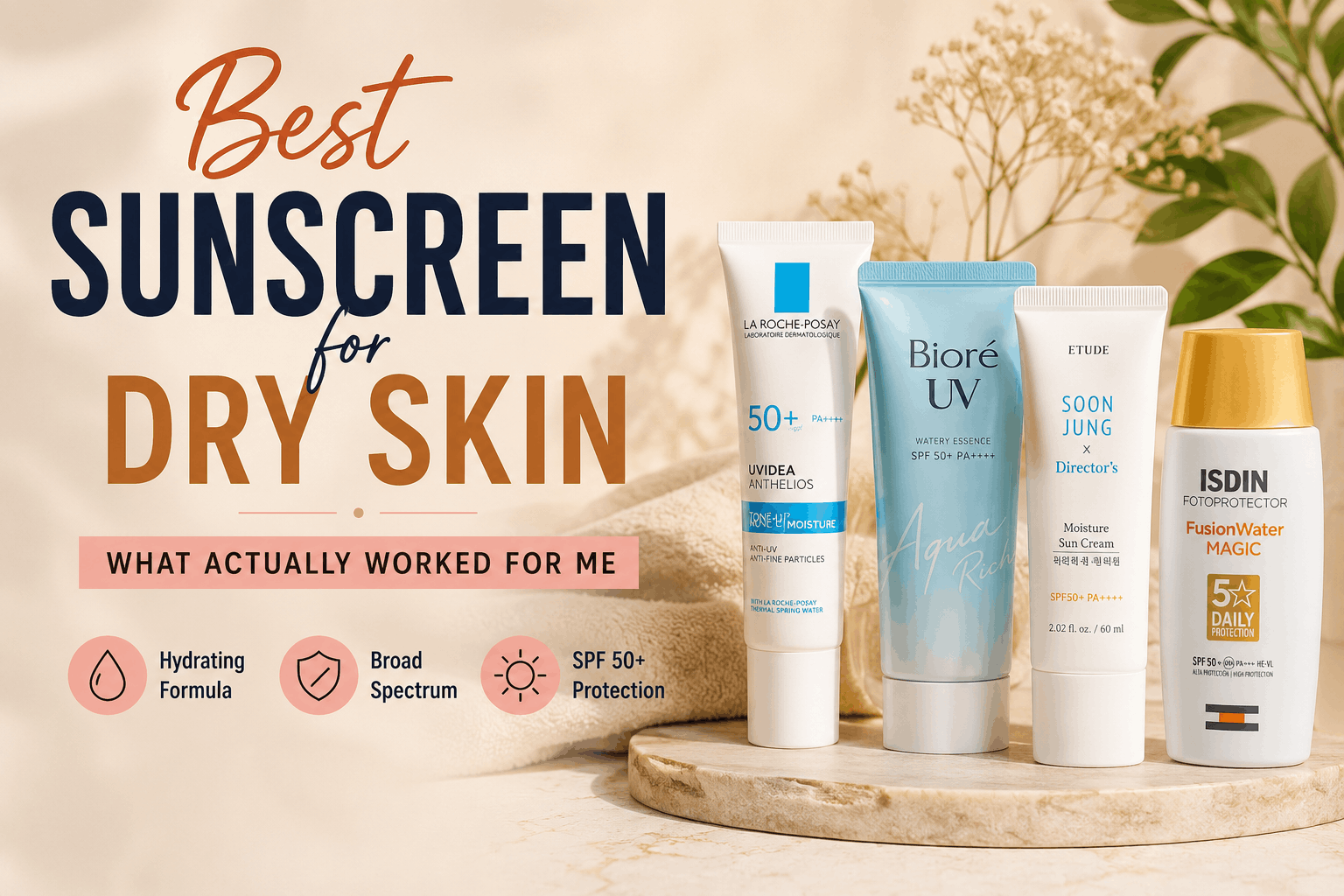
There was a whole summer where I just gave up on sunscreen. My skin was already dry. Every bottle I tried made it worse by the afternoon. My cheeks felt tight. My nose started flaking. I looked like I had powder sitting on my face by lunchtime.
So I stopped wearing it for a while. Not proud of that decision. But I understand why I made it.
It took months of testing different bottles before I actually understood what dry skin needs from a sunscreen. This is not a copied list from some random site. This is what worked after living with flaky irritated skin and testing more products than I want to admit.
Why Sunscreen Often Fights With Dry Skin
Most sunscreens are built for protection first. Comfort comes second. Many formulas use high alcohol content or heavy silica to create that matte finish people want. That works great for oily skin. It is rough for dry skin.
I used to think the fix was just moisturizing more underneath the sunscreen. That helped a little. It did not fix the real issue. The sunscreen itself needed to work with my skin instead of against it.
What Actually Made A Difference
After a lot of trial and error here is what mattered most.
Cream or lotion formulas beat gels and sprays. Gels dry down fast and often feel stripping. Sprays are convenient but usually thin and drying. Cream sunscreens feel heavier going on. That heaviness is exactly what dry skin needs.
Look for ceramides hyaluronic acid or squalane on the label. These are not just fancy words for marketing. When a sunscreen has a real amount of these ingredients you notice the difference within days.
SPF 30 to 50 is usually the sweet spot. I used to think a higher SPF number always meant better protection. Higher SPF formulas often pack in more active filters. That can be harsher on dry skin. A solid SPF 30 to 50 with good reapplication habits works better in real life than SPF 100 that leaves your face irritated.
Mineral sunscreen is not automatically better for dry skin. A lot of skincare content pushes mineral formulas as the answer for dry or sensitive skin. In my case some mineral sunscreens were more drying because of high zinc oxide without enough oils or emollients to balance it out. A well made chemical sunscreen actually worked better for me. This depends on your own skin so test before trusting anyone’s opinion including mine.
Sunscreens That Actually Worked For My Skin
Skin is personal so “the best” really depends on the person. These are the ones that earned a permanent spot in my bathroom cabinet.
La Roche Posay Anthelios Melt in Milk SPF 60. Despite the high SPF number the milky texture melts in fast without leaving a stiff or cakey feeling. This became my daily pick for months.
EltaMD UV Daily SPF 40. Lighter than I expected. The hyaluronic acid actually helped with hydration through the day. My dermatologist recommended this one after I complained about tightness with other brands.
Neutrogena Hydro Boost SPF 50. Affordable and genuinely hydrating. The texture is not as refined as pricier options. It still over delivers for the price.
CeraVe Hydrating Sunscreen SPF 30. Real ceramide content here. If your skin is sensitive on top of being dry this one tends to feel gentler.
None of these are paid mentions. They are simply what is sitting in my cabinet right now because they earned that spot.
My Step By Step Routine That Changed Things
Step one. Moisturize first then wait a couple of minutes. I used to apply sunscreen right over wet moisturizer. That caused pilling and a weird rolling texture on my skin. Waiting two to three minutes for the moisturizer to absorb fixed that instantly.
Step two. Use enough product. Do not skimp. I used to apply a thin layer because I hated the heavy feeling. Using too little means you are not actually protected. You end up reapplying more often which irritates dry skin even further. A pea to nickel size amount for the face is the general rule.
Step three. Reapply with a spray or cushion instead of starting over. Reapplying thick cream sunscreen over makeup felt impossible until I started using SPF setting sprays or SPF cushion compacts for touch ups. Supergoop’s setting spray and a couple of Korean SPF cushions saved me from washing my face in the middle of the day just to reapply.
Step four. Give any new sunscreen two weeks before judging it. Some sunscreens feel amazing on day one but cause dryness or clogged pores after a week of daily use. Others feel a little heavy at first and settle in nicely once your skin adjusts. Two weeks became my personal rule before deciding if something was a keeper.
Real Scenarios Where This Actually Mattered
I remember testing a highly recommended mineral SPF 50 during a work trip to a cold dry climate. By day two my skin was flaking around my nose and jawline. That never happened with my usual EltaMD. Same skin. Different climate. Completely different result. That is when it clicked that even a good sunscreen can behave differently depending on weather and humidity.
Another time I switched to a lighter gel sunscreen for gym days thinking it would feel less heavy during workouts. My skin ended up tighter than usual by the end of the session because the gel dried down too fast and stripped moisture. I went back to my cream formula and the tightness disappeared.
Common Mistakes To Avoid
Skipping sunscreen on cloudy or indoor days. UV rays pass through clouds and windows more than most people realize. My skin texture improved noticeably once I started wearing sunscreen every day and not just on obviously sunny ones.
Layering too many products before sunscreen. I went through a phase of applying five different serums before sunscreen. My skin felt overloaded and greasy by noon. Simplifying to just a moisturizer and sunscreen combo worked much better.
Assuming “for sensitive skin” means “for dry skin.” These labels are not the same thing. A sunscreen can be fragrance free and gentle but still leave dry skin feeling parched. Always check for hydrating ingredients specifically.
Trusting online recommendations without checking your own skin’s reaction. A sunscreen that works beautifully for oily or combination skin might be a disaster for dry skin. Treat online suggestions as a starting point and not a guarantee.
A Few Extra Things Worth Knowing
If your skin gets flakier in winter consider switching to a richer sunscreen formula for that season instead of using the same one all year. What works in humid summer weather might not hold up once the heater is running indoors and the air outside is dry.
Do not skip lip SPF either. Dry skin often comes paired with dry chapped lips. Regular lip balm does not protect against UV. A tinted SPF lip balm made a bigger difference than I expected.
If you wear makeup daily look into SPF infused tinted moisturizers or foundations as a backup layer and not a replacement for your actual sunscreen. They help extend protection through the day without adding another heavy layer.
Final Thoughts
Finding the right sunscreen for dry skin is not about chasing whatever is trending online. It is about understanding what your specific skin needs and being patient enough to test a few options before settling in.
My skin went from constantly flaky and uncomfortable to genuinely fine with daily sunscreen. It stopped being something I dreaded every morning. If you are in the same boat give yourself permission to experiment a little. The right one is out there. Once you find it sunscreen stops feeling like a chore and just becomes part of your day.
FAQs
What is the best sunscreen for dry skin? There is no single best option for everyone. Cream based sunscreens with ceramides hyaluronic acid or squalane tend to work well for dry skin. La Roche Posay Anthelios Melt in Milk EltaMD UV Daily and CeraVe Hydrating Sunscreen are solid starting points.
Should dry skin use mineral or chemical sunscreen? It depends on the individual formula and not just the category. Some mineral sunscreens can be drying because of high zinc oxide content. Well formulated chemical sunscreens with hydrating ingredients often feel more comfortable on dry skin.
Is a higher SPF always better for dry skin? Not necessarily. Higher SPF formulas often contain more active filters which can be harsher on dry or sensitive skin. SPF 30 to 50 combined with consistent reapplication is usually more comfortable and just as effective.
How often should I reapply sunscreen if I have dry skin? Roughly every two hours when you are outdoors or after sweating or swimming. Using an SPF setting spray or SPF cushion compact makes reapplying over makeup much easier.
Can sunscreen make dry skin worse? Yes if the formula contains high alcohol content or lacks hydrating ingredients. That is why checking the ingredient list matters more than just picking a popular brand.
Do I need sunscreen on cloudy days if I have dry skin? Yes. UV rays pass through clouds and glass windows so daily use matters even when it does not feel sunny outside.