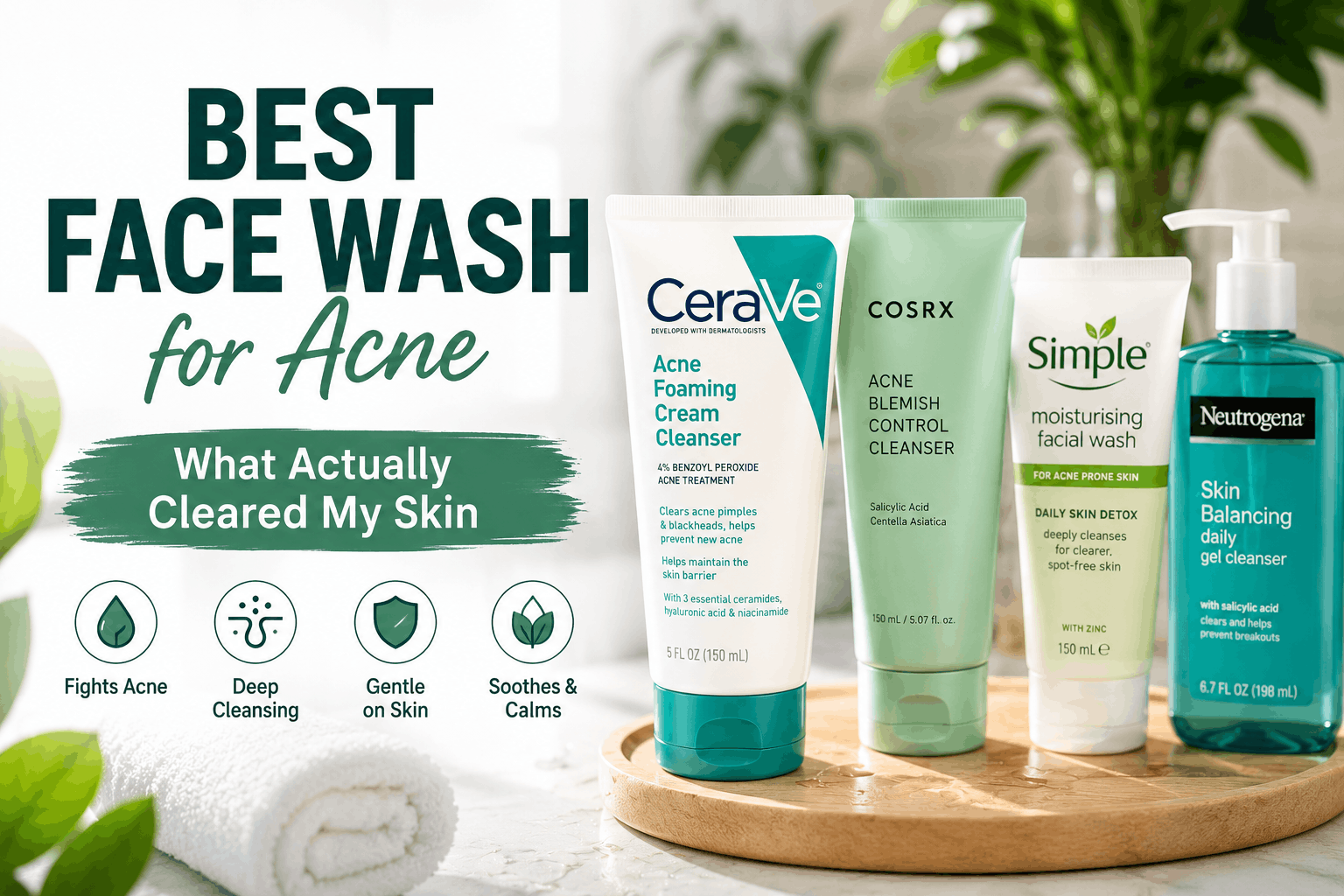
I remember standing in front of a pharmacy shelf holding four different face washes at once. My skin was breaking out along my jaw. My forehead had that oily shine by noon. I had already tried three cleansers that month and none of them worked.
I ended up buying all four that day out of pure frustration. Looking back that was not a smart move. Some of those products fought against each other on my skin and made things worse before they got better.
It took me almost a year of testing switching and paying attention to my own skin before I found a routine that actually calmed my acne down. This is not a copied list from some skincare influencer. This is what worked after dealing with actual breakouts and testing more bottles than I want to admit.
Why Face Wash Alone Cannot Fix Everything But It Still Matters A Lot
Acne is usually caused by a mix of things. Oil production. Clogged pores. Bacteria. Hormones. Sometimes diet. Sometimes stress. A face wash cannot fix all of that on its own.
But the right cleanser sets the stage for everything else you put on your skin afterward. A harsh face wash can strip your skin and cause more oil production as a reaction. A weak face wash might not clean deep enough to stop new breakouts from forming. Finding the middle ground took me longer than I expected.
What I Learned Actually Matters In A Face Wash
After a lot of trial and error here is what made the biggest difference.
Salicylic acid works well for most acne types. This ingredient gets deep into pores and breaks down the oil and debris that causes breakouts. I noticed a real difference within two weeks of using a cleanser with a proper amount of salicylic acid instead of just a tiny trace amount for marketing purposes.
Benzoyl peroxide face washes work but need caution. This ingredient kills acne causing bacteria fast. It also dries out skin fast if used too often. I made the mistake of using a benzoyl peroxide wash twice a day for two weeks straight and ended up with peeling skin around my mouth and nose.
Gentle foaming cleansers beat harsh scrubs every time. I used to think scrubbing harder meant cleaner skin. That belief actually made my acne worse. Physical scrubs with rough beads caused small tears in my skin barrier which led to more irritation and more breakouts.
pH balanced formulas matter more than people realize. Skin sits at a slightly acidic pH naturally. Many bar soaps and old school face washes are alkaline and disrupt that balance. Switching to a pH balanced gel cleanser reduced my redness within days.
Face Washes That Actually Worked For My Skin
Skin reacts differently for everyone so treat this as a starting point rather than a guarantee.
CeraVe Renewing SA Cleanser. This one uses salicylic acid along with ceramides so it does not strip the skin while still clearing pores. This became my everyday cleanser for most of the year.
La Roche Posay Effaclar Medicated Gel Cleanser. Strong enough to handle active breakouts but gentle enough for daily use. My dermatologist actually pointed me toward this one after I described my jawline breakouts.
Neutrogena Oil Free Acne Wash. Budget friendly and effective for mild to moderate acne. The salicylic acid percentage here is solid for the price point.
PanOxyl 4 Percent Benzoyl Peroxide Wash. This one is strong. I only use it two to three times a week now instead of daily since daily use dried my skin out too much.
None of these are paid mentions. These are simply what earned a permanent spot in my shower caddy after months of testing.
My Step By Step Routine That Actually Helped
Step one. Wash your face no more than twice a day. I used to wash my face constantly thinking it would keep oil away. Overwashing actually triggered more oil production as my skin tried to compensate. Morning and night is enough for most people.
Step two. Use lukewarm water not hot water. Hot water feels satisfying but it strips natural oils fast and can make irritation worse. Lukewarm water cleans just as well without the extra dryness.
Step three. Apply cleanser with fingertips not a rough cloth or brush. I used a cleansing brush for a while thinking it gave a deeper clean. It actually irritated my acne and spread bacteria around my face instead of removing it properly. Clean fingertips work better for most acne prone skin.
Step four. Rinse thoroughly and pat dry instead of rubbing. Leftover cleanser residue can clog pores just as much as dirt or oil. Patting your face dry with a clean towel instead of rubbing also reduces irritation around active breakouts.
Step five. Follow up with a lightweight moisturizer even if your skin feels oily. I used to skip moisturizer thinking it would cause more breakouts. Skipping it actually made my skin overproduce oil to compensate for the dryness. A gel based oil free moisturizer solved that problem completely.
Real Scenarios Where This Actually Mattered
I remember switching to a benzoyl peroxide wash right before a big work event thinking it would clear my skin fast. Instead my skin turned red and flaky by the day of the event because I used it too aggressively without easing into it. Lesson learned the hard way about introducing new acne products slowly.
Another time I traveled to a much more humid climate for two weeks and kept using my usual salicylic acid cleanser at the same frequency. My skin actually broke out less during that trip because the humidity balanced out the drying effect of the product. That taught me that climate really does change how your skin reacts to the same routine.
Common Mistakes To Avoid
Switching products too often. I used to give up on a face wash after three or four days if I did not see instant results. Most acne products need two to four weeks before you can judge if they are actually working.
Combining too many active ingredients at once. I once used a salicylic acid cleanser followed by a benzoyl peroxide spot treatment and a retinol serum in the same routine. My skin barrier could not handle that much at once and ended up more irritated than before.
Popping or picking at breakouts. This one seems obvious but it took me a long time to actually stop. Picking spreads bacteria and often leads to scarring that lasts far longer than the original breakout would have.
Ignoring your pillowcase and phone screen. I improved my skin significantly just by changing my pillowcase more often and wiping down my phone screen regularly. Bacteria and oil buildup on things that touch your face daily can undo a good cleansing routine.
A Few Extra Things Worth Knowing
If your acne is hormonal in nature a face wash alone likely will not solve the full problem. Seeing a dermatologist for options like spironolactone or birth control adjustments might be necessary alongside a good skincare routine.
Diet plays a role for some people though it varies a lot person to person. I noticed a small improvement when I cut back on dairy but this is not the same for everyone so do not expect a guaranteed fix from diet changes alone.
Sunscreen still matters even with acne prone skin. Some acne treatments make skin more sensitive to sun exposure so skipping sunscreen can actually make dark marks from old breakouts worse and slower to fade.
Final Thoughts
Clearing acne is rarely about finding one miracle product. It is about understanding your own skin’s triggers and building a routine that supports it instead of fighting against it.
My skin went from constant breakouts and redness to mostly calm with occasional flare ups that I now know how to handle. If you are still searching for what works for you give yourself permission to slow down and test things properly instead of jumping from product to product every few days. The right routine takes time to find but once you get there your skin will thank you for the patience.
FAQs
What is the best face wash for acne? There is no single best option for everyone since skin reacts differently to different ingredients. Cleansers with salicylic acid like CeraVe Renewing SA Cleanser or La Roche Posay Effaclar Medicated Gel Cleanser tend to work well for most acne types.
Should I use benzoyl peroxide or salicylic acid for acne? Salicylic acid is generally gentler for daily use and works well for blackheads and mild to moderate acne. Benzoyl peroxide is stronger and better for inflamed active breakouts but needs to be used less frequently to avoid dryness.
How often should I wash my face if I have acne? Twice a day is usually enough for most people. Washing more often than that can strip your skin and trigger even more oil production as a reaction.
Can face wash alone clear acne completely? Not always. Face wash sets the foundation but acne often needs a full routine including moisturizer sunscreen and sometimes dermatologist guided treatment depending on the severity and cause.
Why does my acne get worse before it gets better with a new face wash? Some active ingredients cause an initial purging period where existing clogged pores come to the surface faster. This usually settles down within two to four weeks if the product is actually suited to your skin.
Does diet affect acne? For some people yes especially with dairy or high sugar foods but this varies a lot from person to person. It is worth testing for yourself rather than assuming it applies universally.