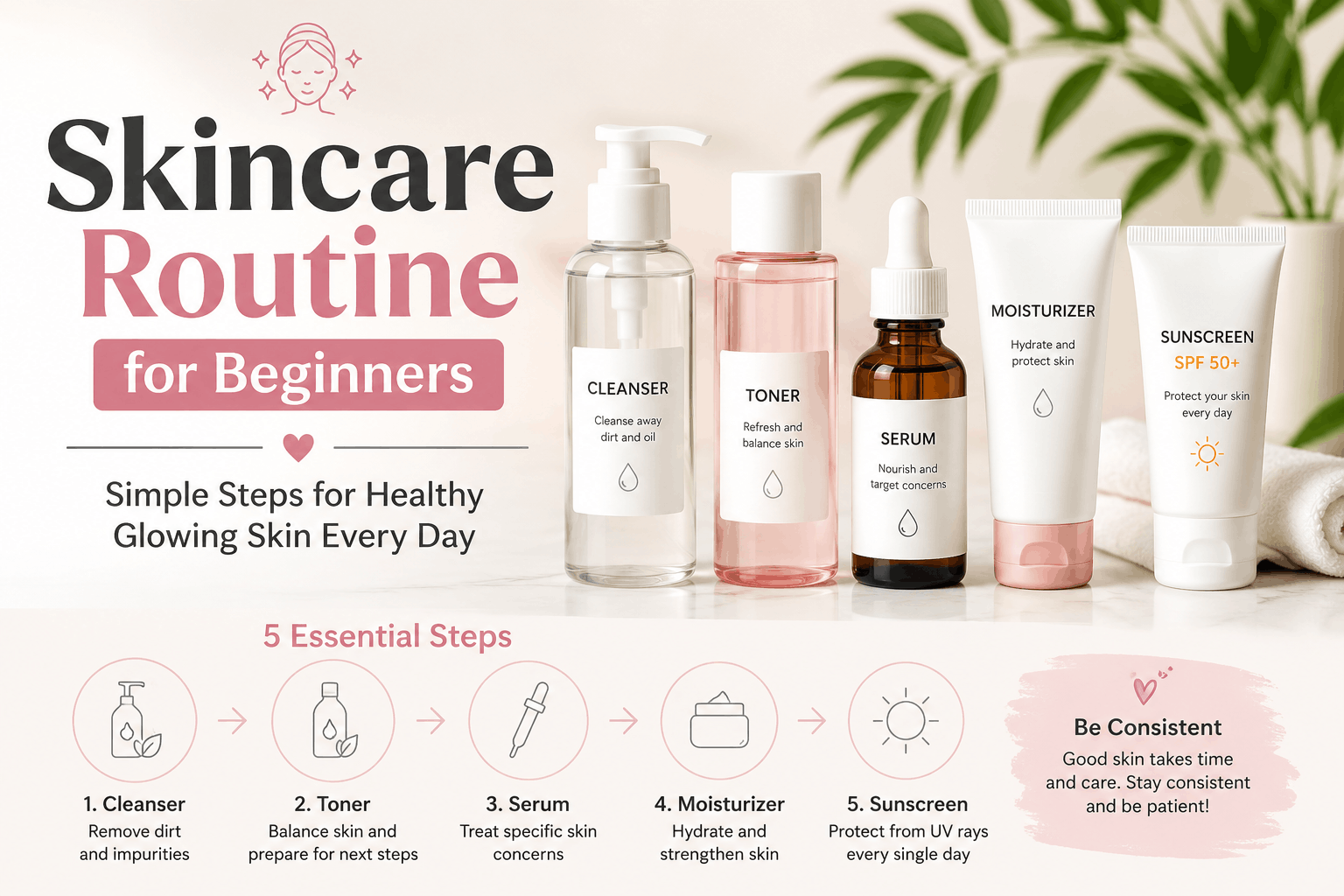
My cousin messaged me one night with a photo of her bathroom shelf. Six different products. Two of them still sealed. She had bought all of it after watching a single skincare video and had no idea what to actually use or in what order.
I remember feeling that exact same confusion myself years ago. I bought a serum before I even had a proper cleanser. I used a scrub every single day thinking that was normal. My skin paid the price for those early mistakes long before I understood what I was actually doing.
So instead of just telling her to google it I sat down and walked her through everything from scratch. This article is basically that same conversation written out. No overwhelming ten step routine. Just the actual basics that matter when you are starting from zero.
Why Most Beginners Start In The Wrong Place
The biggest issue I see with people starting skincare is they start with the exciting stuff. Serums with fancy sounding ingredients. Trending sheet masks. Retinol because someone online said it changes everything.
None of that works well without the basics in place first. Your skin needs a stable foundation before it can actually benefit from stronger products. Skipping straight to actives without understanding your skin type or building a proper base is exactly how I ended up with irritated red patches on my cheeks during my first few months of trying to figure this out.
What Actually Matters When You Are Just Starting Out
Here is what I told my cousin and what genuinely made the biggest difference for me too.
Figure out your actual skin type before buying anything. I told her to go a full day without any product and just notice how her skin behaved. Oily by afternoon. Tight and flaky by evening. Comfortable most of the day. That single observation shapes almost every product choice that follows.
A cleanser is not just a formality. I used a cleanser for over a year without realizing mine was too harsh for my skin. It left a tight uncomfortable feeling every single time which I mistook for being clean. A proper cleanser should leave your skin feeling calm not stripped.
Moisturizer is non negotiable regardless of skin type. My cousin assumed moisturizer was only for dry skin. I explained that oily skin still needs hydration and skipping it usually leads to even more oil production later in the day as your skin tries to compensate.
Sunscreen is the step people skip the most and regret the most. I did not wear sunscreen consistently until my mid twenties and I can already see uneven tone in old photos compared to now. This single step prevents more long term damage than almost anything else on a beginner list.
Products That Made Sense As Starting Points
Skin reacts differently for everyone so treat this as a helpful starting point rather than a strict list to follow exactly.
Cetaphil Gentle Skin Cleanser. Mild and predictable. A safe starting point for almost any skin type while you are still figuring things out.
CeraVe Facial Moisturizing Lotion. Lightweight enough for oily skin days but still hydrating enough for drier patches. This became a staple for both my cousin and me.
La Roche Posay Anthelios Melt In Milk. A sunscreen that does not feel heavy or greasy which made daily use actually realistic instead of something easily skipped.
The Ordinary Niacinamide 10 Percent Plus Zinc. A gentle first active once the basics feel comfortable. Helped with minor oiliness and occasional breakouts without any harsh reaction for either of us.
None of these are paid mentions. These are simply what worked as genuinely beginner friendly starting points based on real use.
A Step By Step Routine For Someone Starting From Zero
Step one. Cleanse your face once in the morning and once at night. Nothing more aggressive is needed at the start. Overwashing is one of the most common beginner mistakes and it usually backfires.
Step two. Apply moisturizer immediately after cleansing while skin is still a little damp. This traps in more hydration compared to applying it on fully dry skin.
Step three. Add sunscreen every single morning without exception. Even on cloudy days. Even if you are mostly indoors. Windows do not block UV rays the way people assume.
Step four. Stick with just these three steps for at least three to four weeks. I know it feels boring compared to buying a whole shelf of products. This waiting period lets you actually see how your skin behaves with the basics before adding anything else.
Step five. Introduce one new product at a time after that. Wait another two to three weeks between each new addition. This makes it obvious what is working and what might be causing irritation if something goes wrong.
A Real Example Of How This Played Out
My cousin wanted to skip straight to a vitamin C serum and a clay mask in her first week because both were trending online at the time. I convinced her to hold off and just stick with cleanser moisturizer and sunscreen first.
Three weeks in she texted me confused because her skin already looked more even and less irritated than before even though she had not added anything exciting yet. That is usually the biggest surprise for beginners. The basics alone often fix more than people expect.
A few weeks after that she added niacinamide gradually and noticed a small improvement in some old acne marks. If she had jumped straight into three new products in week one she would have had no idea which one was actually responsible for any changes or any irritation.
Common Mistakes To Avoid As A Beginner
Buying based on trends instead of your own skin type. Just because a product goes viral does not mean it fits your specific skin. My cousin almost bought a heavy oil based moisturizer because an influencer used it despite having naturally oily skin herself.
Skipping patch testing new products. Applying something new directly to your whole face without testing a small area first is risky. A patch test on the jaw or inner arm can save you from a much bigger reaction across your whole face.
Expecting fast results. Most skincare changes take four to eight weeks to actually show. Giving up on a good product after three or four days because nothing changed yet is one of the most common beginner regrets I hear about.
Layering too many new things at once. This makes it nearly impossible to figure out what is actually helping or what might be causing a reaction if your skin starts acting up.
A Few Extra Things Worth Knowing
Your skin type is not permanent. It can shift with age season stress and even diet. What worked for me at twenty two needed adjusting by twenty six once my skin behaved differently.
Consistency matters far more than having an expensive routine. A basic three step routine followed daily will outperform an expensive complicated one followed randomly a few times a week.
If you are dealing with something more persistent like cystic acne or eczema a dermatologist is worth seeing rather than trying to solve everything through general online advice alone.
Final Thoughts
Starting skincare does not need six products bought in one impulsive shopping trip. The actual foundation is simple. Cleanser. Moisturizer. Sunscreen. Patience while your skin adjusts.
My cousin went from an overwhelmed bathroom shelf full of unopened products to a routine she actually understands and sticks with. If you are just starting out give yourself permission to keep it simple at first. Add more once you actually know what your skin needs instead of guessing based on whatever is trending that week.
FAQs
What is a good skincare routine for complete beginners? A simple routine with a gentle cleanser a lightweight moisturizer and daily sunscreen is the best starting point. Adding a gentle active like niacinamide later once your skin adjusts is a reasonable next step.
How many products should a beginner use in their skincare routine? Three products are enough at the start. Cleanser moisturizer and sunscreen cover the essentials without overwhelming your skin or your budget.
Should beginners use serums right away? Not immediately. Building a stable routine with the basics first makes introducing serums or other actives much smoother later without irritation.
How long does it take to see results from a beginner skincare routine? Most people notice initial changes around four weeks with more visible improvement around six to eight weeks of consistent daily use.
Is sunscreen really necessary for beginners just starting out? Yes. Sunscreen is one of the most important steps for preventing long term damage like uneven tone and premature aging regardless of how basic the rest of your routine is.
What is the biggest mistake beginners make with skincare? Buying too many products at once based on trends instead of understanding their own skin type first. This usually leads to irritation and makes it hard to know what is actually working.